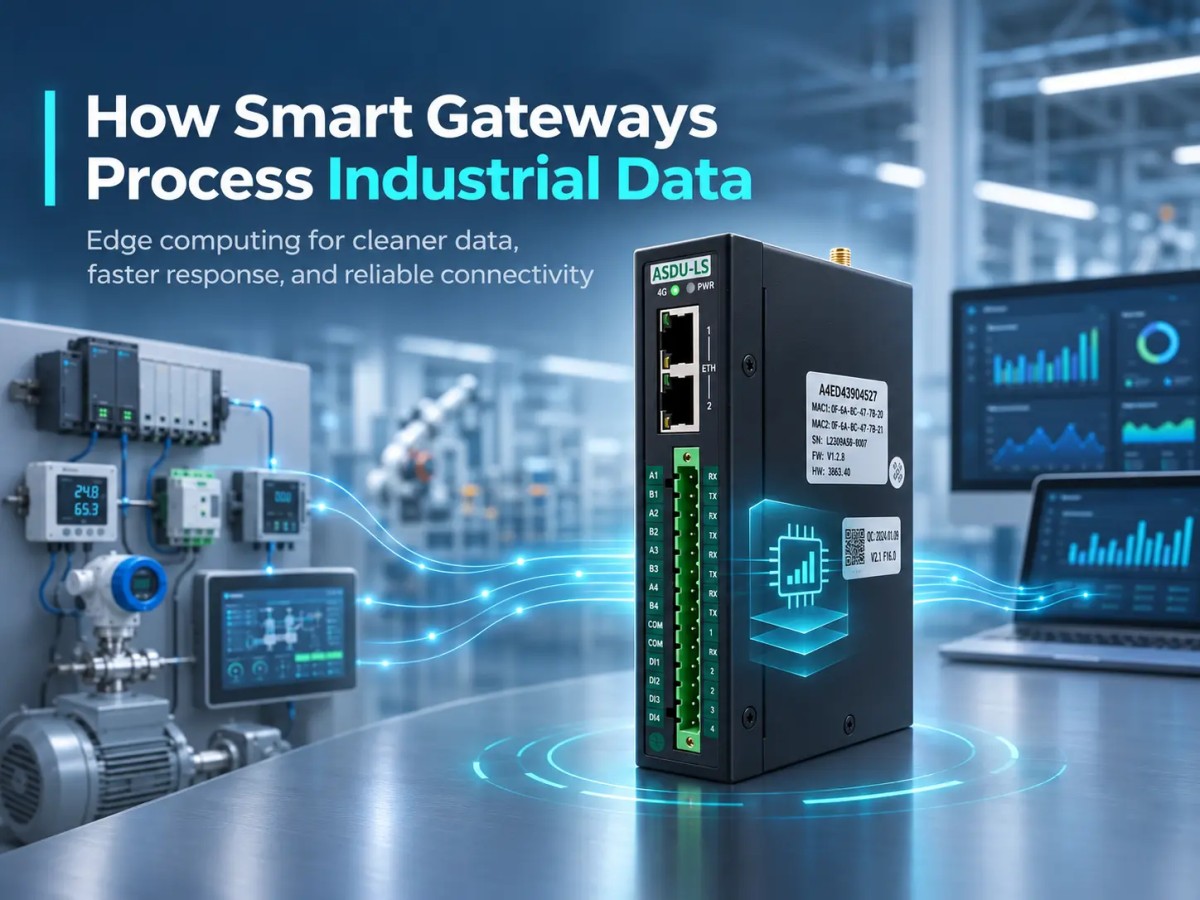
How Does an Industrial IoT Gateway Process Data? A Practical Guide to Edge Computing
Industrial facilities generate massive amounts of data every day.
Smart meters, PLCs, and industrial sensors continuously collect temperature, pressure, current, flow, and equipment status. However, connecting devices to a network and uploading data does not necessarily mean that the data is being used effectively.
Should all collected data be uploaded directly to the cloud? What happens when the network connection is interrupted? Can abnormal equipment conditions be detected and handled in time?
These challenges highlight the importance of Edge Computing and Industrial IoT Gateways.
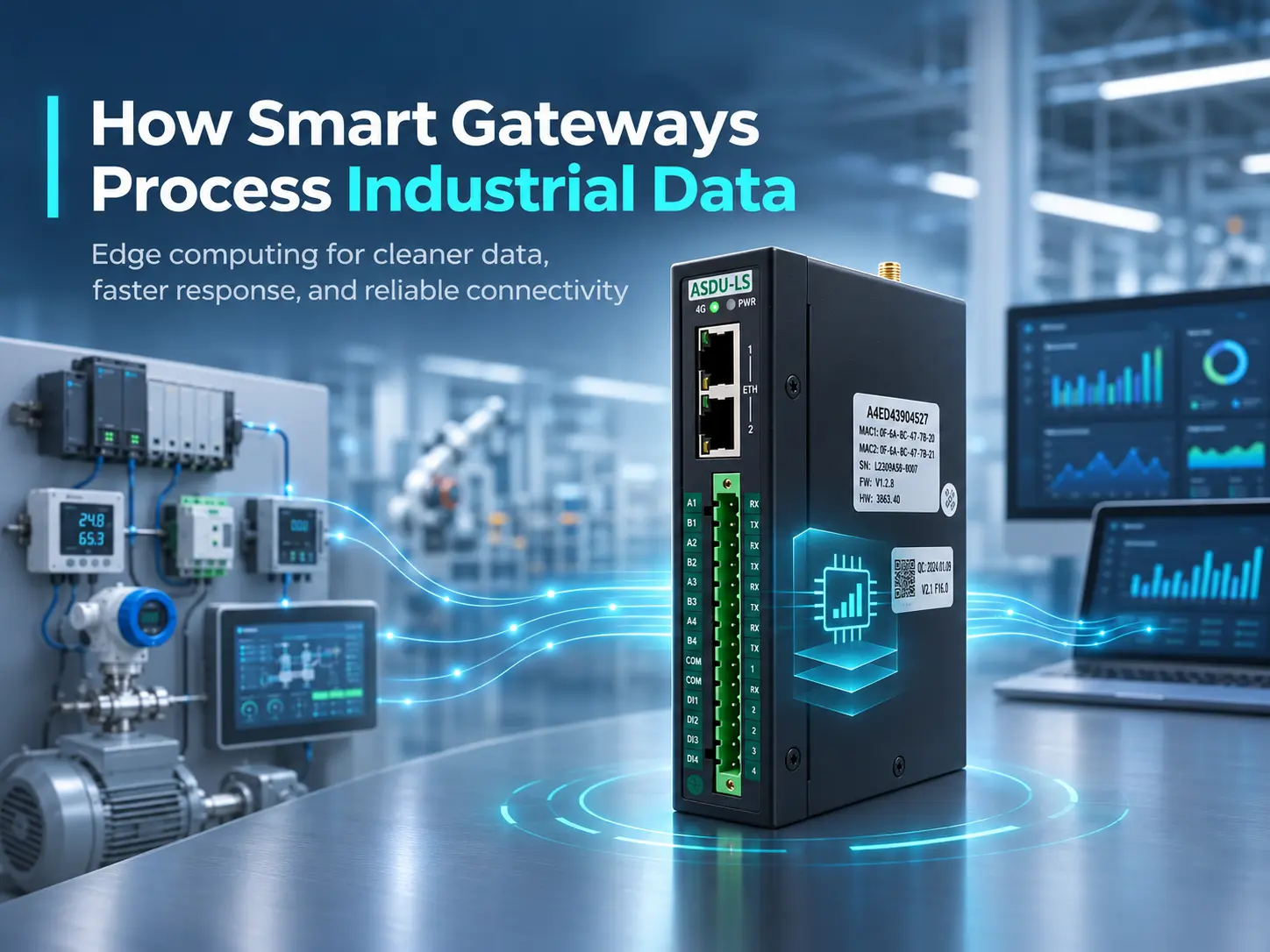
An intelligent gateway does more than connect industrial devices to a network. It can also process, filter, analyze, and manage data locally before forwarding relevant information to cloud platforms or upper-level applications.
Let's explore how an Industrial IoT Gateway processes industrial data and how edge computing improves industrial data management.
1. Common Challenges in Industrial Data Acquisition
Before understanding how an Industrial IoT Gateway works, it is important to identify the challenges commonly encountered in industrial data acquisition and transmission.
1.1 Data Redundancy: Unnecessary Data Increases System Load
Industrial devices may continuously generate large volumes of repetitive data or readings with very little variation.
Transmitting all collected data directly to the cloud can increase network bandwidth consumption, computing requirements, and storage costs. It can also make it more difficult to identify important information.
1.2 Network Instability: Communication Interruptions Can Cause Data Loss
Network connectivity is not always stable in factories, pumping stations, remote facilities, and outdoor installations.
When data acquisition relies entirely on continuous cloud connectivity, network interruptions may result in missing data or incomplete monitoring records.
1.3 Response Delays: Cloud-Only Processing May Not Meet Real-Time Requirements
For applications involving equipment abnormalities, temperature changes, and energy consumption alarms, relying entirely on cloud-based processing can introduce additional communication delays.
In situations requiring timely responses, local data processing and alarm generation can provide an additional layer of responsiveness.
2. How Does an Industrial IoT Gateway Process Data?
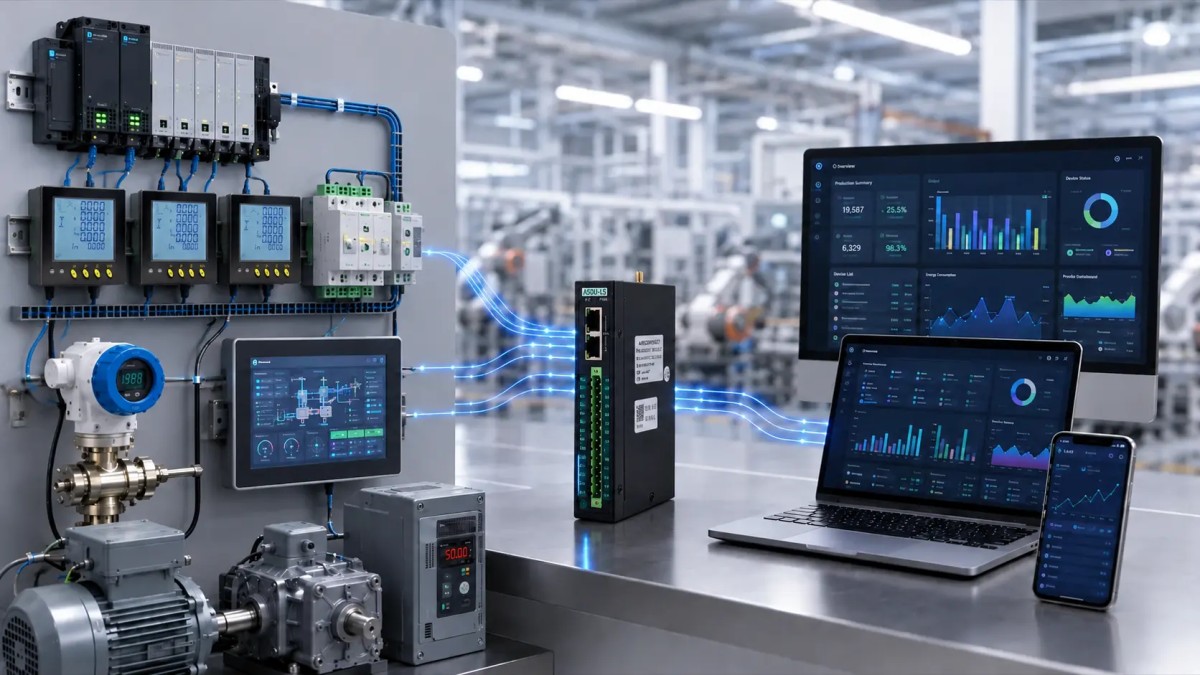
An Industrial IoT Gateway acts as an intelligent connection point between industrial field devices and upper-level platforms.
Depending on its hardware, software, and configuration, it can perform several important edge computing functions.
Here are five key capabilities.
STEP 01 – Data Cleaning and Filtering
Remove Unnecessary Data Before Transmission
An industrial gateway can identify invalid readings, abnormal values, and duplicate data according to predefined filtering rules.
Instead of transmitting every collected value, the gateway can select relevant information for further processing and upload.
This helps reduce unnecessary data transmission and improve the efficiency of industrial data management.
STEP 02 – Data Aggregation and Calculation
Turn Raw Data into Meaningful Information
Industrial applications often require statistical results rather than every individual measurement.
An Industrial IoT Gateway can aggregate data within predefined time windows and calculate values such as: Average values, Maximum and minimum values, Total consumption, Cumulative readings, and other application-specific statistics.
This makes the processed data more useful for energy analysis, equipment monitoring, and operational management.
STEP 03 – Local Rules and Alarm Processing
Respond to Abnormal Conditions at the Edge
An intelligent gateway can monitor collected data against predefined conditions and alarm thresholds.
When a monitored value reaches a configured threshold, the gateway can generate a local alarm and forward the alarm information to the central monitoring platform.
This approach helps reduce dependence on continuous cloud communication for local alarm processing and supports faster responses to abnormal conditions.
STEP 04 – Offline Data Buffering and Automatic Retransmission
Maintain Data Continuity During Network Interruptions
Network interruptions should not necessarily result in permanent data loss.
With local storage and buffering capabilities, an Industrial IoT Gateway can temporarily retain collected data when communication with the cloud platform is unavailable.
Once the network connection is restored, buffered data can be retransmitted according to the configured recovery mechanism.
This helps improve data continuity, particularly in remote facilities and industrial environments with unstable network connections.
STEP 05 – Industrial Protocol Conversion and Platform Integration
Connect Different Devices to Unified Applications
Industrial environments often contain equipment from different manufacturers using different communication protocols and data formats.
An Industrial IoT Gateway can support device connectivity, protocol parsing, and data format conversion to facilitate communication between field devices and upper-level systems.
Depending on the supported interfaces and system architecture, gateway data can be integrated with platforms and middleware using technologies such as MQTT, Kafka, and Redis.
This helps simplify the integration of industrial devices with cloud platforms, monitoring systems, and enterprise applications.
3. Edge Computing vs. Cloud Computing: How Do They Work Together?
Edge computing does not replace cloud computing. Instead, they complement each other through a clear division of responsibilities.
Edge Computing – Local Processing and Rapid Response
The edge side focuses on: Real-time data acquisition, Data cleaning and filtering, Local data aggregation, Rule-based alarm processing, Offline data buffering.
By processing data closer to the equipment, edge computing can reduce unnecessary data transmission and support timely local responses.
Cloud Computing – Centralized Management and Data Applications
The cloud side focuses on: Centralized device management, Long-term data storage, Historical data analysis, Remote configuration management, Equipment monitoring, and comprehensive business applications.
By combining edge computing with cloud platforms, industrial enterprises can build a more flexible and efficient data management architecture.
HEYUAN's Industrial IoT Architecture
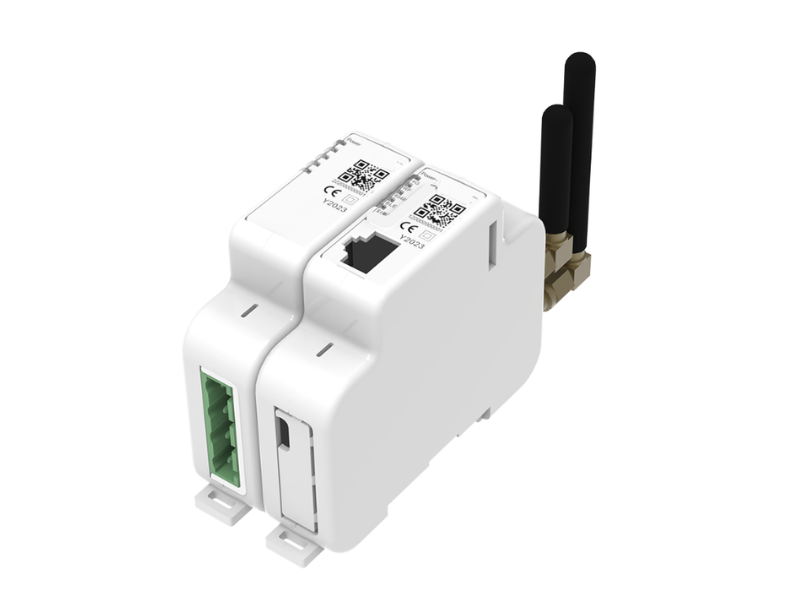
Within the HEYUAN product portfolio, intelligent gateways serve as the connection point between on-site industrial equipment and upper-level applications.
The gateway handles field device connectivity and edge-side data processing, while the Industrial IoT Cloud Platform supports centralized device monitoring, configuration management, batch upgrades, fault diagnosis, and data applications.
Together, they create an integrated architecture covering the entire process, from industrial data acquisition to centralized management and application.
4. Industrial IoT Gateway Application Example: Factory Energy Monitoring
Consider a factory that operates multiple production lines and electrical distribution systems.
Different devices, including electricity meters, PLCs, and sensors, continuously collect information such as electricity consumption, Voltage and current, Equipment operating status, Temperature and environmental conditions, and production equipment parameters.
Without a unified data acquisition architecture, information may remain distributed across different devices and systems.
An Industrial IoT Gateway can collect data from connected equipment, process relevant information locally, and transmit it to a centralized platform.
For example:
1. Data Acquisition: Collect electricity consumption and operating parameters from connected meters, PLCs, and sensors.
2. Data Processing: Filter unnecessary readings and aggregate relevant measurements.
3. Local Monitoring: Apply configured rules to identify abnormal readings and generate alarms.
4. Data Transmission: Forward processed information to the cloud platform.
5. Centralized Management: Allow facility managers to monitor equipment status, review historical data, and analyze energy consumption.
This application example illustrates how edge computing can support more efficient industrial energy monitoring and equipment management.
5. Which Industrial Applications Benefit from Edge Computing?
Industrial IoT Gateways and edge computing are particularly valuable in environments where multiple devices, communication protocols, and data sources need to work together.
Typical application areas include:
Industrial Automation
Connect PLCs, sensors, controllers, and other industrial equipment to centralized monitoring and management systems.
Energy Management
Collect electricity consumption and electrical parameters to support energy monitoring, analysis, and efficiency management.
Smart Buildings
Integrate meters, environmental sensors, and building automation equipment into unified monitoring platforms.
Smart Water Management
Collect operating data from pumping stations, water treatment facilities, and distributed monitoring points.
Remote Equipment Monitoring
Connect geographically distributed equipment and support centralized monitoring, data acquisition, and remote maintenance.
Edge computing is particularly suitable for projects involving: Multiple device types and communication protocols, High-frequency data acquisition, Requirements for timely alarm responses, Unstable network connectivity, widely distributed equipment, Integration with centralized business platforms.
6. Turn Industrial Data into Real Business Value with HEYUAN
Industrial data is valuable not simply because it is collected, but because it can be processed, understood, and used to support real operational decisions.
By combining intelligent gateways with edge computing and cloud-based management platforms, industrial enterprises can improve data acquisition efficiency, simplify device integration, support local alarm processing, and establish more reliable industrial data management systems.
HEYUAN provides industrial IoT products and solutions designed to support industrial data acquisition, communication connectivity, and intelligent monitoring applications.
Whether you are planning an industrial data acquisition project, integrating multiple types of equipment, or developing an edge computing architecture, selecting the right gateway and system configuration is an important step.
Planning an Industrial IoT or Edge Computing Project?
Tell us about your equipment types, communication protocols, data acquisition requirements, alarm rules, network environment, and platform integration needs.
Contact HEYUAN to discuss your project and explore suitable industrial data acquisition and edge computing solutions.
Note: Specific data processing functions, communication protocols, local storage capabilities, and platform integrations depend on the selected gateway model, software configuration, and system architecture.
Share




Leave a Message
Your email address will not be published.
Posts
Products