How to Choose the Right LoRa Module: A Practical LoRa vs. LoRaWAN Selection Guide
Selecting the right LoRa module is not simply about choosing the longest communication distance or the highest transmit power. The right solution depends on the network architecture, number of devices, communication environment, power supply, interface, regional frequency requirements, and whether you need cloud-based management. A practical selection process is: Network Architecture → Communication Range → Power Supply → Environment → Interface → Frequency Band → Hardware Form Factor.
For most industrial IoT projects, the first and most important question is: Do you need a simple LoRa transparent transmission link, or a complete LoRaWAN network? Once this is clear, product selection becomes much easier. Heyuan Intelligence provides industrial LoRa transparent transmission, LoRa Mesh, LoRa I/O, and RS485-to-LoRaWAN communication terminals for applications such as smart metering, PLC communication, solar inverter data transmission, industrial automation, agriculture, and remote monitoring. View Heyuan LoRa & LoRaWAN Products
1. LoRa or LoRaWAN: Start With the Network Architecture
For a small or medium private network where only a few devices need to exchange data locally, LoRa transparent transmission is usually the simpler solution. It does not require a LoRaWAN gateway or network server and is particularly suitable for replacing long RS485 cables. A typical architecture is RS485 Device → LoRa Slave → LoRa Master → PLC / Gateway / Controller. The field device can continue using its existing serial protocol, while the LoRa terminals provide the wireless transmission layer.
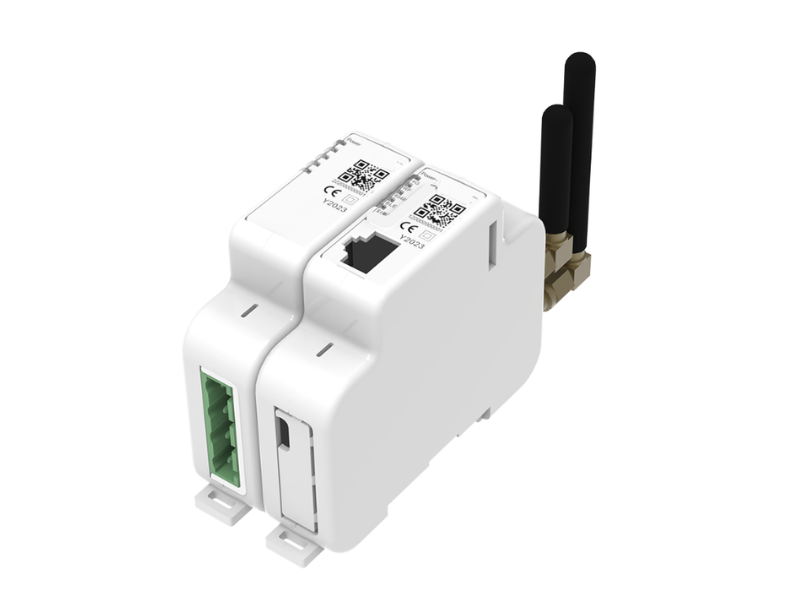
This architecture is commonly used for energy meters, PLCs, photovoltaic inverters, sensors, workshop equipment, pump control, and other industrial devices. For example, Heyuan's IOT-L2S-B1 converts RS485 data to LoRa 433 MHz transparent transmission and is designed for DIN-rail industrial installation.
When a site contains buildings, equipment, or other obstacles that create wireless blind spots, a LoRa Mesh solution may be more suitable. Heyuan's IOT-L2S-B1MS and IOT-L2S-B2MS support RS485 Modbus RTU, point-to-point transparent transmission, self-routing, and multi-hop communication, allowing intermediate nodes to extend network reach where a direct wireless path is difficult.
For projects with many distributed devices, multiple gateways, and centralized cloud management, LoRaWAN is usually the better choice. Its typical architecture is Meter / Sensor → LoRaWAN End Device → LoRaWAN Gateway → Network Server → Cloud Platform. You can deploy multiple gateways across factories, campuses, farms, industrial parks, or distributed sites, providing a more scalable architecture for large IoT systems.
The Heyuan IOT-L2S-C1&C2 RS485 to LoRaWAN Data Converter is designed for this type of industrial application. It provides two RS485 interfaces, supports Modbus RTU and DL/T645, uses LoRaWAN Class C, and is available with AC- or DC-powered variants for continuously powered industrial equipment.
LoRa vs. LoRaWAN at a Glance
A simple rule is: if you only need to transmit RS485 data wirelessly from Point A to Point B, you probably do not need LoRaWAN. If you need many distributed nodes, gateways and centralized cloud management, LoRaWAN is usually more appropriate.
2. Select According to Communication Range and Environment
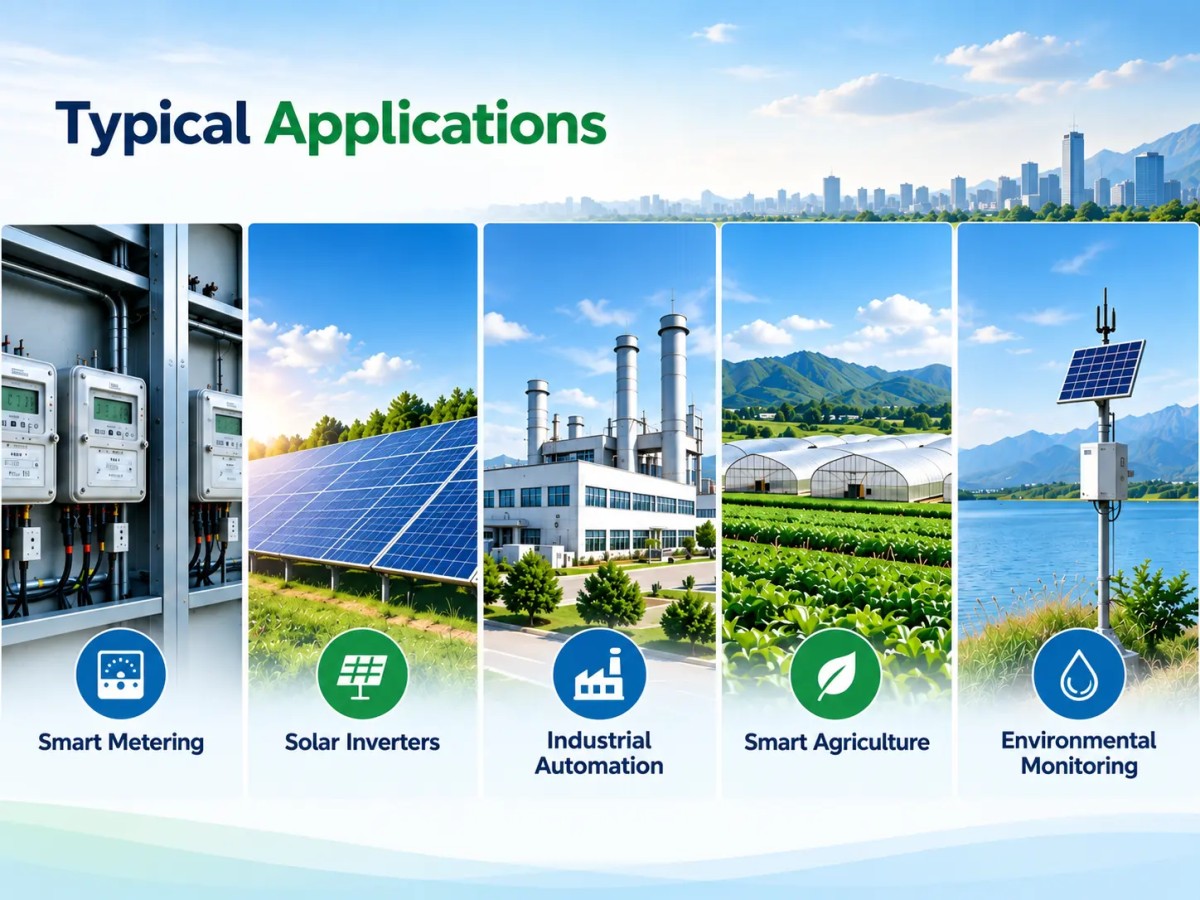
Communication distance is important, but it should not be evaluated independently. Actual LoRa performance depends on transmit power, receiver sensitivity, spreading factor, bandwidth, antenna gain, antenna height, obstacles, interference, terrain, and local RF regulations. A module capable of long-range communication in an open field may achieve a much shorter distance when installed inside a metal cabinet or reinforced-concrete building.
For short-distance applications inside buildings, workshops, basements or nearby control cabinets, stable communication and installation convenience are usually more important than maximum output power. For farms, factory grounds and open industrial sites, longer distances can be achieved with appropriate antennas and installation conditions. For reservoirs, remote farmland, and other long-distance outdoor applications, the complete RF link should be considered, including antenna type, installation height, Fresnel-zone clearance, receiver sensitivity, and communication parameters.
Do not select a module only because it has the highest transmit power. Higher power does not automatically guarantee a better link, and the permitted transmit power and EIRP vary by country and frequency band. For important projects, a field communication test is strongly recommended before large-scale deployment.
3. Consider Power Supply and Power Consumption
Power supply directly affects the networking mode and module type. Industrial equipment such as energy meters, PLCs, gateways, inverters, and control cabinets normally has a continuous power supply, so ultra-low power consumption is not the main priority. In these applications, continuously active LoRa transparent terminals or LoRaWAN Class C terminals can provide faster response and more frequent communication.
Battery-powered equipment such as environmental sensors, field monitoring devices, water meters, and solar-powered terminals has different requirements. Sleep mode, timed wake-up, and periodic reporting become important. In a LoRaWAN system, Class A is generally preferred for battery-powered end devices because of its lower power consumption, whereas Class C is more appropriate for continuously powered equipment that requires faster downlink response. Heyuan's current IOT-L2S-C1&C2 is a Class C industrial terminal, so it is particularly suitable for mains-powered RS485 equipment rather than ultra-low-power battery sensors.
4. Match the Interface and Protocol
For industrial IoT projects, the wireless technology is only one part of the system. The module must also match the interface of the field equipment. RS485 Modbus RTU is widely used by energy meters, PLCs, photovoltaic inverters, protection devices, temperature controllers, and other industrial instruments because of its good noise immunity and reliable serial communication.
For example, an existing Modbus RTU meter can use the architecture Energy Meter → RS485 → LoRa Slave → LoRa Master → RS485 → PLC. The meter does not need to change its original protocol; the LoRa terminals simply replace part of the wired communication path. This makes LoRa transparent transmission particularly useful for retrofit projects where installing new RS485 cables would be expensive or difficult.
Not every project uses RS485. Applications involving switch status, alarm contacts, or remote switching may require digital inputs and relay outputs instead. Heyuan's IOT-L2S-B-I/O LoRa I/O Data Transmission Terminal supports digital input access and relay output, making it suitable for applications such as remote alarm transmission, switch-status monitoring, and control signals.
5. Select the Correct Frequency Band
Frequency selection is especially important for international projects because permitted frequency ranges, channel plans, and transmit-power limits vary by country. LoRaWAN projects should use the frequency plan specified for the installation region, and the end device, gateway, and network server must be configured for compatible regional parameters.
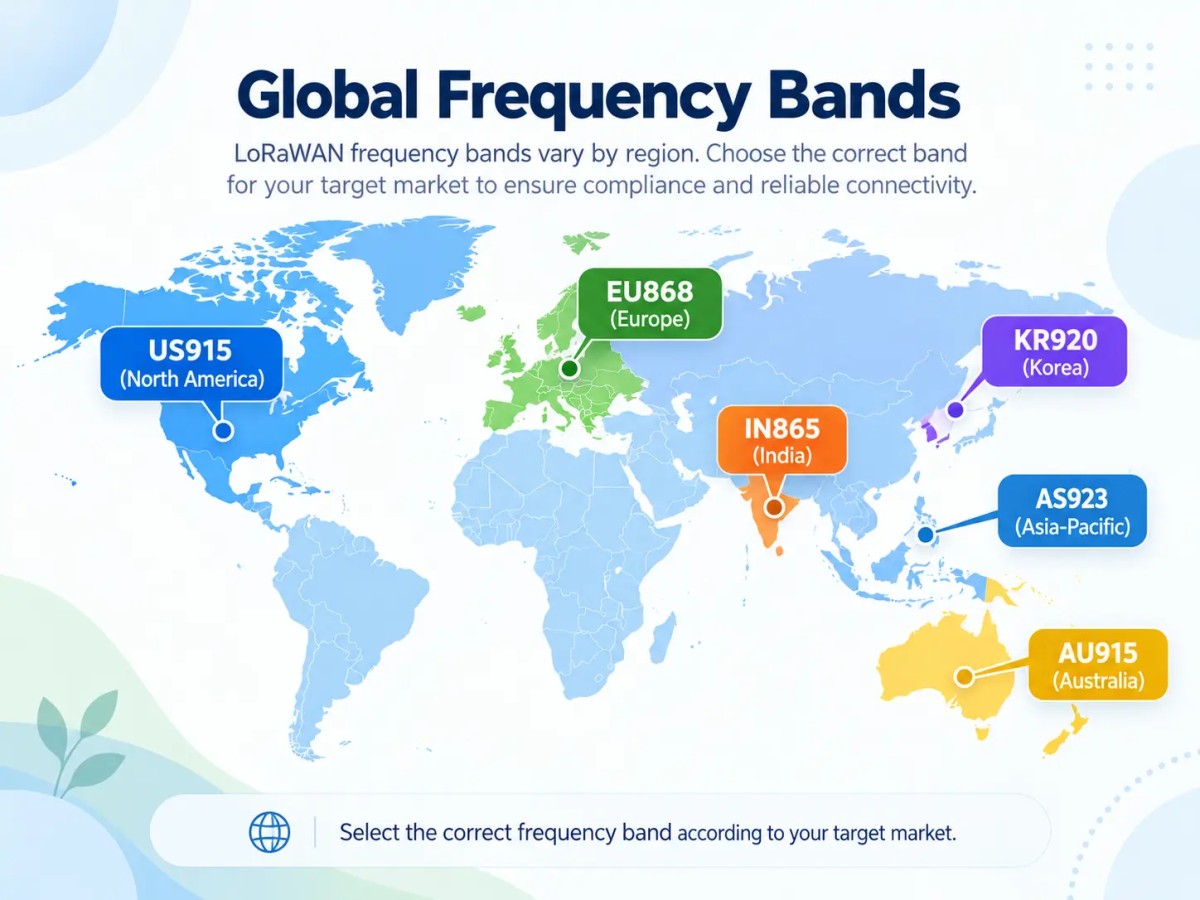
Heyuan's current RS485-to-LoRaWAN product family includes regional options such as IN865, EU868, AU915, AS915 and AS923, depending on the model and target market. Conventional Heyuan LoRa transparent transmission products are also available for sub-GHz private wireless communication, including 433 MHz models.
For overseas projects, the frequency band should always be confirmed according to the final installation country before ordering. A module designed for one regional plan should not automatically be assumed to be suitable for another market.
6. Consider the Installation Environment
Indoor control rooms and standard industrial cabinets normally require conventional industrial-grade modules with reliable RS485 communication and DIN-rail installation. Outdoor applications such as agriculture, reservoirs, water conservancy and street lighting require additional consideration of operating temperature, humidity, UV exposure, lightning protection and enclosure protection.
For humid, underground or corrosive environments such as manholes, sewage systems and basements, the enclosure design can be just as important as the radio itself. Waterproof or protected installation, suitable antennas and corrosion-resistant wiring should be considered as part of the complete system rather than selecting the wireless module alone.
7. Application-Based LoRa Product Selection
The following table provides a practical starting point for matching common applications to suitable communication architectures and Heyuan product types.
Heyuan's LoRa product family currently includes IOT-L2S-B1 RS485 transparent transmission terminals, IOT-L2S-B1MS/B2MS LoRa Mesh converters, IOT-L2S-B-I/O wireless I/O terminals, and IOT-L2S-C1&C2 RS485-to-LoRaWAN converters, allowing the communication architecture to be selected according to the actual application rather than using one networking method for every project. Explore Heyuan LoRa & LoRaWAN Data Transmission Terminals
8. Quick Selection Guide
Before choosing a LoRa module, first determine whether the project is local or cloud-based, how many devices are involved, what interface and protocol the equipment uses, what communication distance is required, whether there are major obstacles, how the equipment is powered, and in which country it will be installed. For a small local network without cloud management, choose LoRa transparent transmission. For complex sites requiring intermediate wireless nodes, consider LoRa Mesh. For large-scale distributed devices requiring gateways and cloud integration, choose LoRaWAN. For industrial meters, PLCs, and inverters, RS485 Modbus RTU is usually the preferred interface, while I/O terminals are more appropriate for dry contacts, alarms, and relay-control applications.
Frequently Asked Questions
What is the difference between LoRa and LoRaWAN?
LoRa is the radio modulation technology used for long-range, low-power wireless communication. LoRaWAN is a network protocol built on LoRa and defines how end devices communicate through gateways and network servers. A LoRa transparent transmission system can operate without a LoRaWAN gateway, while a LoRaWAN device is designed to operate as part of a LoRaWAN network.
Does LoRa require a gateway?
Not necessarily. Two compatible LoRa transparent transmission terminals can communicate directly in a point-to-point system, and point-to-multipoint networks are also possible. LoRaWAN, however, requires a LoRaWAN gateway and network infrastructure.
Can LoRa transmit Modbus RTU data?
Yes. RS485 LoRa transparent transmission is widely used to create wireless communication links between Modbus RTU devices such as energy meters, PLCs, and inverters. The original industrial protocol can remain unchanged while LoRa provides the wireless transmission layer.
How far can LoRa communicate?
There is no single guaranteed distance. Actual performance depends on antenna type, antenna height, obstacles, transmit power, spreading factor, bandwidth, receiver sensitivity, and interference. Open-field specifications should therefore be treated as reference values rather than guaranteed site performance.
When should I use LoRa Mesh?
LoRa Mesh can be considered when direct point-to-point communication is difficult because of buildings, equipment or other communication blind spots, and intermediate nodes can be deployed to extend connectivity.
Which LoRaWAN frequency should I choose?
The correct regional plan depends on the installation country. Common options include EU868, US915, AU915, IN865, KR920 and AS923 variants. Always confirm local regulatory requirements before ordering.
Conclusion
The correct LoRa solution should be selected according to the network architecture first, rather than simply choosing the module with the longest advertised range. For local communication between energy meters, PLCs, photovoltaic inverters, and other RS485 devices, LoRa transparent transmission provides a simple and cost-effective way to reduce cabling. For complex local environments, LoRa Mesh can extend communication through intermediate nodes. For large-scale distributed applications requiring gateways, centralized management, and cloud connectivity, LoRaWAN provides a more scalable architecture.
Heyuan Intelligence provides industrial LoRa and LoRaWAN communication solutions covering RS485 transparent transmission, LoRa Mesh, wireless I/O, and RS485-to-LoRaWAN communication, helping customers select a wireless architecture according to the actual device interface, network scale, installation environment, and target market.View the Complete Heyuan LoRa & LoRaWAN Product Range

Share




Leave a Message
Your email address will not be published.
Posts
Products