What Is a DTU? Functions, Applications, DTU vs. RTU, and LoRa Solutions
A DTU, usually short for Data Transmission Unit, is an industrial communication device that connects field equipment to remote servers, cloud platforms, gateways, or monitoring systems.
Many traditional industrial devices, such as energy meters, sensors, instruments, and PLCs, communicate through serial interfaces such as RS-232, RS-485, or TTL. A DTU receives data from these devices and transmits it through a wired or wireless communication network.
Depending on the model, a DTU may use 4G, 5G, NB-IoT, Wi-Fi, Ethernet, LoRa, or other communication technologies. Its primary purpose is to enable equipment that does not have built-in networking capabilities to support remote data collection, monitoring, configuration, and control.
1. What Are the Core Functions of a DTU?
1.1 Serial Data Communication
A DTU connects to field devices through serial interfaces such as RS-232 or RS-485.
For example, an RS-485 energy meter can send voltage, current, power, and energy data to a DTU. The DTU then forwards the data to a gateway, server, or cloud-based monitoring platform.
This enables existing serial devices to integrate into an Industrial Internet of Things system without requiring the replacement of the original equipment.
1.2 Serial-to-Network Conversion
Cellular, Ethernet, and Wi-Fi DTUs can convert serial data into network packets that can be transmitted through TCP/IP-based networks.
Depending on the product, the DTU may support communication modes and protocols such as: TCP Client, TCP Server, UDP, MQTT, HTTP, Modbus TCP, Transparent transmission
The supported protocols depend on the DTU model and its intended application.
1.3 Bidirectional Transparent Transmission
Many DTUs support transparent data transmission.
In transparent-transmission mode, the DTU forwards data between the serial device and the remote system without changing the original application data. This makes the DTU compatible with Modbus RTU and many manufacturer-specific serial protocols.
Modbus RTU is commonly implemented over RS-485 serial networks and uses a request-and-response communication structure between connected devices.
1.4 Stable Communication Management
Industrial DTUs may include communication-management functions such as: Automatic network reconnection, Heartbeat packets, Link-status monitoring, Watchdog recovery, Automatic restart, Multiple server connections, Communication timeout detection.
These features help maintain stable operation at unattended or remotely distributed installation sites.
1.5 Remote Configuration and Maintenance
Depending on the model, a DTU may support: Remote parameter configuration, Firmware upgrades, Remote restart, Server-address management, Communication-status monitoring, Device diagnostics.
Remote management can reduce the need for engineers to visit each installation site.
1.6 Data Caching and Retransmission
Some DTUs can temporarily store data when the communication network is unavailable.
After the connection is restored, the device can retransmit the cached data to the server. This function is useful in applications where temporary network interruptions could otherwise cause data loss.
Because this capability is model-dependent, it should always be confirmed in the product datasheet.
2. How Does a DTU Work?
A DTU acts as a communication bridge between field equipment and a remote management system.
Uplink Data Transmission
Sensor, Meter, or PLC → DTU → Communication Network → Server or Cloud Platform
The field device sends data to the DTU through a serial interface. The DTU processes or encapsulates the data and transmits it through the selected communication network.
The remote platform can then store, display, analyze, or generate alarms from the received data.
Downlink Command Transmission
Server or Cloud Platform → Communication Network → DTU → Field Equipment
The remote system sends a command to the DTU. The DTU forwards the command to the connected PLC, meter, controller, or instrument through the serial interface.
This bidirectional communication makes it possible to perform both remote monitoring and remote control.
3. Common Types of Industrial DTUs
DTUs can be classified according to the communication network they use.
Cellular DTU
A cellular DTU uses 4G, 5G, or NB-IoT to connect field equipment to a remote server through a public mobile network.
It is suitable for geographically distributed equipment where wired Internet access is unavailable.
Typical applications include: Remote pump stations, Outdoor distribution cabinets, Environmental monitoring stations, Photovoltaic power stations, Water and electricity metering.
Wi-Fi DTU
A Wi-Fi DTU connects serial devices to an existing wireless local area network.
It is commonly used inside factories, buildings, offices, and other sites with reliable Wi-Fi coverage.
Ethernet DTU
An Ethernet DTU provides wired serial-to-Ethernet communication.
It is suitable for installations where network stability, high availability, and fixed infrastructure are priorities.
LoRa Data Transmission Terminal
A LoRa data transmission terminal uses LoRa wireless technology to transmit data between field devices, master nodes, gateways, or controllers.
LoRa is a long-range wireless modulation technology. LoRaWAN, by comparison, is a standardized LPWAN networking protocol and system architecture built around gateways, network servers, and application servers. A proprietary LoRa point-to-point or mesh product should therefore not automatically be described as a LoRaWAN device.
LoRa data transmission terminals are particularly useful when: RS-485 cabling is difficult or expensive, Devices are distributed across a large site, A private local wireless network is preferred, or public cellular connectivity is not required.
Low-volume industrial data must be transmitted over a long distance.
4. Typical DTU Application Scenarios
Power and Energy Management
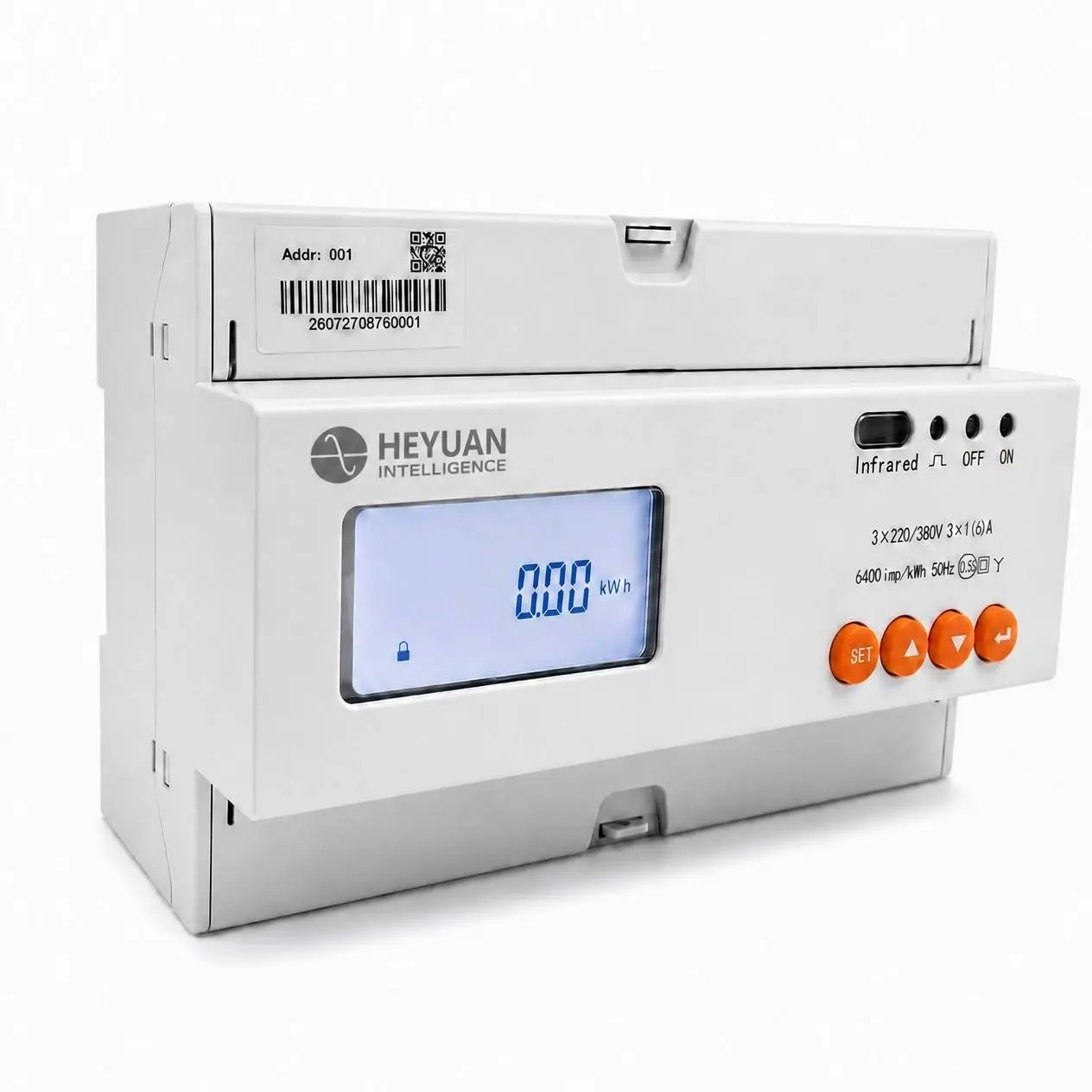
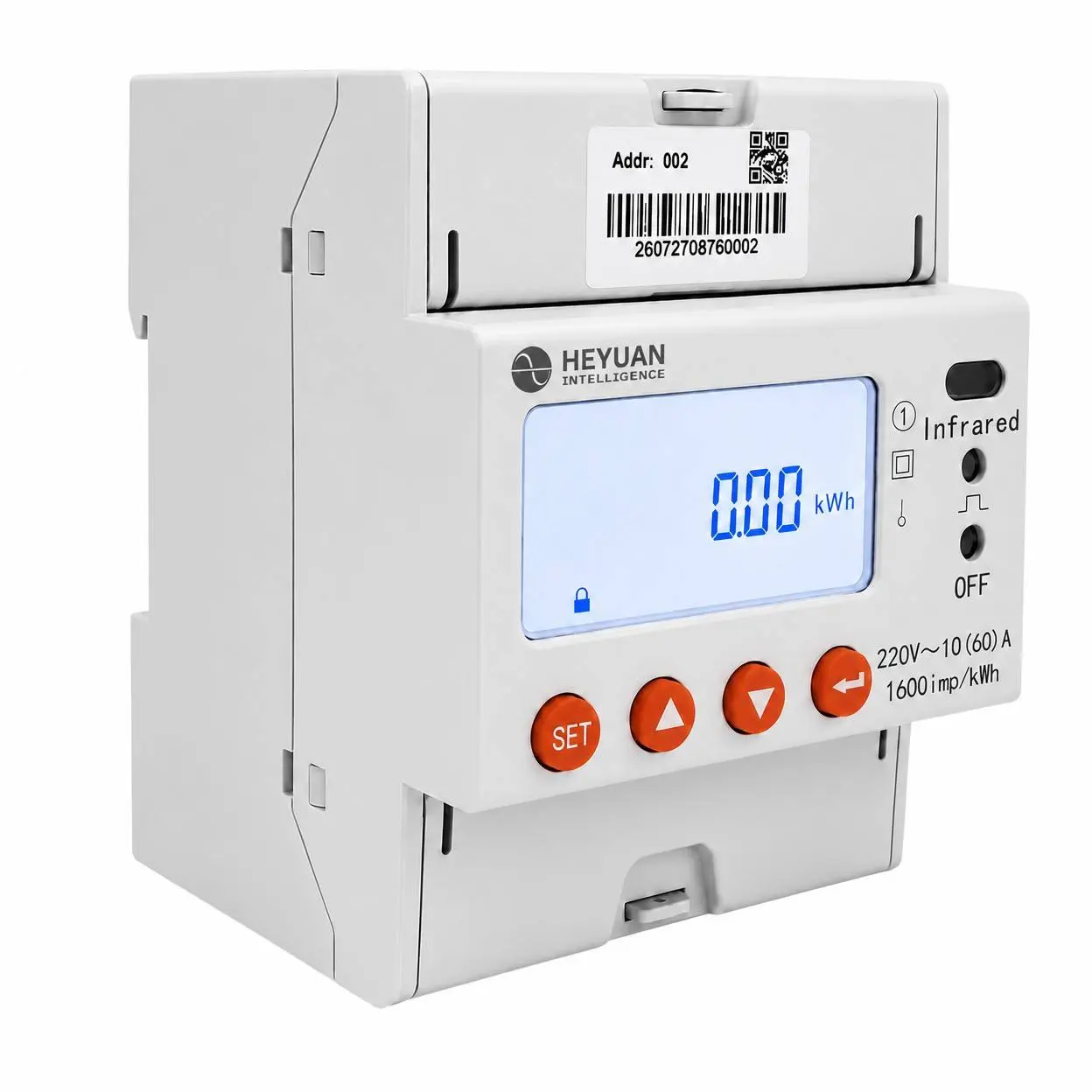
DTUs can connect energy meters, power-monitoring terminals, protection devices, and power-quality instruments to remote energy management systems.
Typical applications include: Remote meter reading, Distribution-cabinet monitoring, Transformer monitoring, Energy-consumption analysis, Photovoltaic monitoring, Electrical fault alarms.
Water Utilities
DTUs are widely used for remote monitoring of: Water meters, Pump stations, Water tanks, Pipeline pressure, Water levels, Valve status.
Environmental Monitoring
Environmental sensors can transmit data through a DTU to a central monitoring platform.
Common monitoring parameters include: Temperature and humidity, Air quality, Water quality, Rainfall, Wind speed, Noise, and Soil conditions.
Smart Agriculture
DTUs can be used to collect greenhouse and agricultural data, including: Soil moisture, Soil temperature, Greenhouse temperature and humidity, Light intensity, Water levels, Irrigation-system status.
The data can be sent to a remote platform for monitoring, analysis, and irrigation control.
Industrial Automation
In factories, DTUs can connect PLCs, sensors, controllers, and production equipment to industrial IoT or supervisory systems.
Common applications include: Equipment-status monitoring, Fault-alarm reporting, Production-data collection, Remote maintenance, Energy monitoring, Predictive maintenance.
Municipal Infrastructure
DTUs can also be used in: Streetlight monitoring, Pipeline monitoring, Manhole-cover monitoring, Parking systems, Traffic equipment, Municipal pumping stations.
5. DTU vs. RTU
DTUs and RTUs are both used in remote monitoring systems, but their primary functions are different.
DTU: Focused on Communication
A DTU mainly provides connectivity and data transmission.
Typical DTU functions include: Serial communication, Serial-to-network conversion, Transparent transmission, Automatic reconnection, Heartbeat detection, Remote configuration.
RTU: Focused on Acquisition and Control
An RTU, or Remote Terminal Unit, normally provides data acquisition, logic processing, alarm handling, and equipment control.
An RTU may include: Analog inputs, Digital inputs, Relay outputs, Local control logic, Alarm processing, Communication with SCADA systems.
An RTU may continue executing local control logic even when communication with the central platform is temporarily interrupted.
In simple terms:
·DTU = communication and networking
·RTU = data acquisition, logic, and control
However, some modern industrial devices combine DTU and RTU functions in one unit.
6. DTU vs. Modem
A modem mainly provides network access and signal modulation or demodulation.
A DTU is generally designed specifically for industrial equipment and may integrate: RS-232 or RS-485 interfaces, Transparent serial transmission, Industrial communication protocols, Automatic reconnection, Heartbeat detection, Remote configuration, Watchdog recovery, and local data storage
Therefore, a DTU is more than a basic communication modem. It provides a managed connection between industrial field devices and remote systems.
7. Heyuan RS485-to-LoRa Wireless Data Transmission Solution
For projects where installing RS-485 communication cables is difficult, a LoRa-based wireless data transmission solution can provide an alternative connection between meters, sensors, gateways, and monitoring systems.
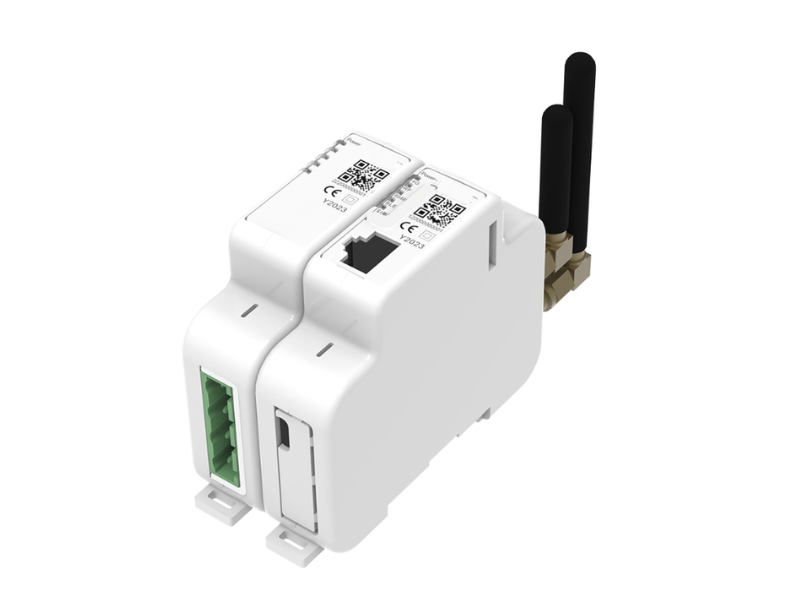
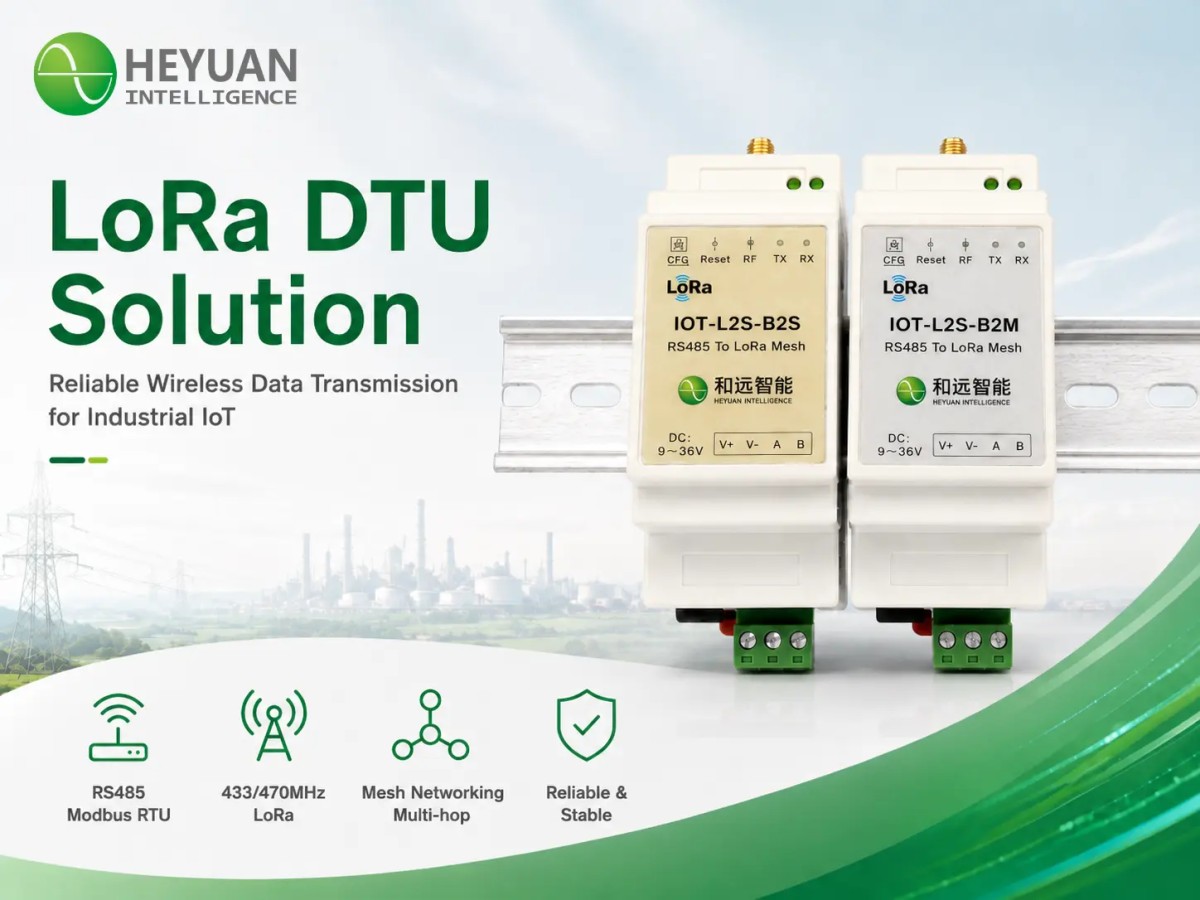
The Heyuan IOT-L2S-B2MS is an industrial RS485-to-LoRa wireless data converter designed for transmitting data from RS-485 devices over a private LoRa wireless network.
It is more accurately described as a LoRa data transmission terminal or RS485-to-LoRa converter, rather than a conventional cellular DTU that directly connects to an Internet server.
Key Features of the IOT-L2S-B2MS
The product provides: Isolated RS-485 interface, Modbus RTU communication, 433MHz or 470MHz operating frequency, Semtech LLCC68 LoRa RF chip, Point-to-point transparent transmission, Self-organizing mesh networking, Automatic routing and network recovery, Multi-hop communication, DC 9–36V power input, RS-485 baud rates from 2,400 to 115,200bps, 35mm DIN-rail mounting
Its RF output power is adjustable from 2dBm to 32dBm, while the supported air data rate ranges from 2.1kbps to 62.5kbps. (Heyuan Intelligence Technology Co, Ltd.)
Typical Communication Architecture
A typical system can use the following structure:
Energy Meter or Sensor → Slave LoRa Module → LoRa Wireless Network → Master LoRa Module → Gateway or Monitoring System
The slave module connects to an energy meter, sensor, or instrument through RS-485.
The master module receives the wireless data and connects to an industrial gateway or central controller through RS-485. The gateway can then forward the data to a local server, cloud platform, SCADA system, or energy management system.
According to the product configuration, a module can also function as an end node and repeater. Multi-hop communication can extend node reachability in applications where direct wireless communication is obstructed or insufficient. (Heyuan Intelligence Technology Co, Ltd.)
Typical Applications
The IOT-L2S-B2MS is suitable for: Wireless energy-meter reading, Building energy monitoring, Factory equipment monitoring, Distribution-cabinet monitoring, Agricultural sensor networking, Pump-station communication, RS-485 instrument networking, Wireless Modbus RTU transmission
It is particularly suitable for retrofitting projects where installing new communication cables would be expensive, disruptive, or technically difficult.
LoRa, Not LoRaWAN
The IOT-L2S-B2MS uses LoRa wireless communication with point-to-point and mesh-networking capabilities.
It should not be confused with Heyuan’s LoRaWAN models operating in regional bands such as IN865, EU868, AU915, AS915, and AS923. LoRaWAN devices use the standardized LoRaWAN network architecture, while the IOT-L2S-B2MS is intended for private LoRa transparent-transmission and mesh applications. (Heyuan Intelligence Technology Co, Ltd.)
8. How to Select the Right DTU or Data Transmission Terminal
Before selecting a product, consider the following factors.
Field Interface
Confirm whether the connected equipment uses: RS-232, RS-485, TTL, Ethernet, Digital input/output, Analog input/output
Communication Network
Choose the network according to the project requirements:
·4G or 5G: Remote Internet communication
·NB-IoT: Low-data-rate cellular applications
·Wi-Fi: Sites with existing wireless LAN coverage
·Ethernet: Stable wired networks
·LoRa: Private long-range local wireless communication
·LoRaWAN: Standardized LPWAN deployments using gateways and network servers
Protocol Compatibility
Check whether the product supports the required protocol or communication mode, such as: Modbus RTU, Modbus TCP, Transparent transmission, TCP Client, TCP Server, UDP, MQTT, HTTP, LoRaWAN.
Network Topology
Determine whether the project requires: Point-to-point communication, Point-to-multipoint communication, Mesh networking, Gateway-based communication, Direct cloud connectivity.
Transmission Environment
Wireless performance can be affected by: Buildings and walls, Metal distribution cabinets, Installation height, Antenna location, Electromagnetic interference, Data rate, Transmit power, Distance between nodes
A site survey or on-site communication test is recommended for important projects.
Power Supply and Installation
Confirm the available power supply and mounting method.
For example, the Heyuan IOT-L2S-B2MS uses a DC 9–36V power supply and supports 35mm DIN-rail mounting. (Heyuan Intelligence Technology Co, Ltd.)
Platform Integration
Confirm how the collected data will reach the final monitoring system.
A complete solution may require: A DTU or LoRa terminal, an industrial gateway, A local server, A cloud platform, A SCADA system, an energy management system
Conclusion
A DTU provides the communication link between traditional industrial equipment and remote monitoring systems. It allows serial devices such as meters, sensors, instruments, and PLCs to transmit data through wired or wireless networks.
Cellular DTUs are suitable for direct long-distance communication through public mobile networks. Ethernet and Wi-Fi DTUs are suitable for sites with existing network infrastructure. LoRa data transmission terminals are useful for private local wireless networks where RS-485 cabling is difficult.
The Heyuan IOT-L2S-B2MS RS485-to-LoRa Wireless Data Converter provides an industrial solution for transmitting Modbus RTU data between meters, sensors, gateways, and monitoring systems. Its isolated RS-485 interface, transparent transmission, mesh networking, multi-hop capability, and DIN-rail design make it suitable for distributed industrial data-acquisition and energy-monitoring applications. (Heyuan Intelligence Technology Co, Ltd.)

Share




Leave a Message
Your email address will not be published.
Posts
Products